
Stress Management: Building a Toolbox for Soccer and Life
Stress is part of being an athlete. Between school, training, games, evaluations, friendships, family, and expectations, players experience pressure from many directions. The goal of stress management isn’t to eliminate stress, because that’s impossible, but to learn how to respond to it in ways that support growth, confidence, and success.
At Nashville United Soccer Academy, development isn’t just physical. It’s mental, emotional, and personal. Learning how to manage stress helps players perform better, enjoy the game more, and feel healthier both on and off the field.
Recognizing When Stress Is Too Much
Stress shows up differently for everyone, but there are common signs that tell us we might be carrying more than we should alone. Some signals include:
-
Constant worry or anxiety
-
Upset stomach or headaches
-
Feeling tired all the time
-
Isolating from teammates or friends
-
Avoiding activities you usually enjoy
-
Increased negativity or pessimism
Noticing these signs early helps players take action before stress starts to affect performance, confidence, and happiness. Stress doesn’t mean something is wrong with you, it means something is asking for your attention.
Using Your Resources
Everyone has resources to help manage stress. The key is learning to recognize them and use them consistently. There are two types:
Internal Resources
These come from within:
-
Resilience
-
Work ethic
-
Confidence
-
Passion
-
Problem-solving skills
-
Positive self-talk
-
Coping skills
External Resources
These come from your environment:
-
Supportive people
-
Teammates
-
Coaches
-
Sleep
-
Nutritious food
-
Healthy routines
When stress feels overwhelming, it’s often because we’re not using enough of our resources, not because we don’t have them.
Positive Self-Talk: Your Inner Teammate
One of the most powerful tools athletes have is how they talk to themselves. Whatever we tell ourselves, we start to believe. Instead of being your harshest critic, try to be your strongest supporter. Talk to yourself the way you would talk to a teammate or best friend. Examples of healthy self-talk:
-
“I can do this.”
-
“I’ve done hard things before.”
-
“It’s okay to not be perfect.”
-
“Mistakes don’t define me.”
-
“It’s okay to have an off day.”
-
“I’m proud of myself.”
Your inner voice can either add stress or reduce it, choose the one that helps you grow!
Take Care of Your Body
Mental health and physical health are connected. When the body is taken care of, the mind handles stress better. That means:
-
Getting enough sleep
-
Eating nutritious food
-
Drinking water
-
Resting when injured
-
Allowing time for recovery
A tired body makes stress feel heavier. A healthy body makes challenges feel more manageable.
Take Care of Your Mind
Just like muscles need training, the mind needs care too. Ways to support mental health include:
-
Writing down your thoughts and feelings
-
Talking to someone you trust
-
Focusing on what you’re grateful for
-
Taking breaks from social media
-
Giving yourself space when things feel overwhelming
You don’t need to hold everything inside. Letting thoughts out, on paper or in conversation, makes them easier to handle.
Reach Out for Support
No athlete succeeds alone. There are people in every player’s life who want to see them succeed:
-
Family members
-
Friends
-
Teachers
-
Coaches
-
Teammates
Asking for help isn’t weakness, it’s leadership. Sometimes stress doesn’t need a solution. Sometimes it just needs a listener. Sharing what you’re feeling can instantly make situations feel lighter and more manageable. At NUSA, players are encouraged to speak up when something feels heavy, on the field or off.
Coping Skills for Stressful Moments
When stress hits in the moment, before a game, after a mistake, during a tough week, having quick tools helps reset the body and mind. Here are a few:
Deep Breathing:
-
Inhale for 5 seconds
-
Hold for 7 seconds
-
Exhale for 8 seconds
Slow breathing tells your nervous system to calm down.
Grounding:
Bring attention back to the present:
-
Name 5 things you can see
-
4 things you can feel
-
3 things you can hear
-
2 things you can smell
-
1 thing you can taste
Or simply feel your feet on the ground and rub your hands together to reconnect with your body.
Reframing Thoughts
Change how you speak to yourself. Instead of, “I’m a failure.” Try, “Making mistakes is part of learning.” Reframing doesn’t ignore problems, it puts them in a healthier, more useful perspective.
Build Your Stress Toolbox
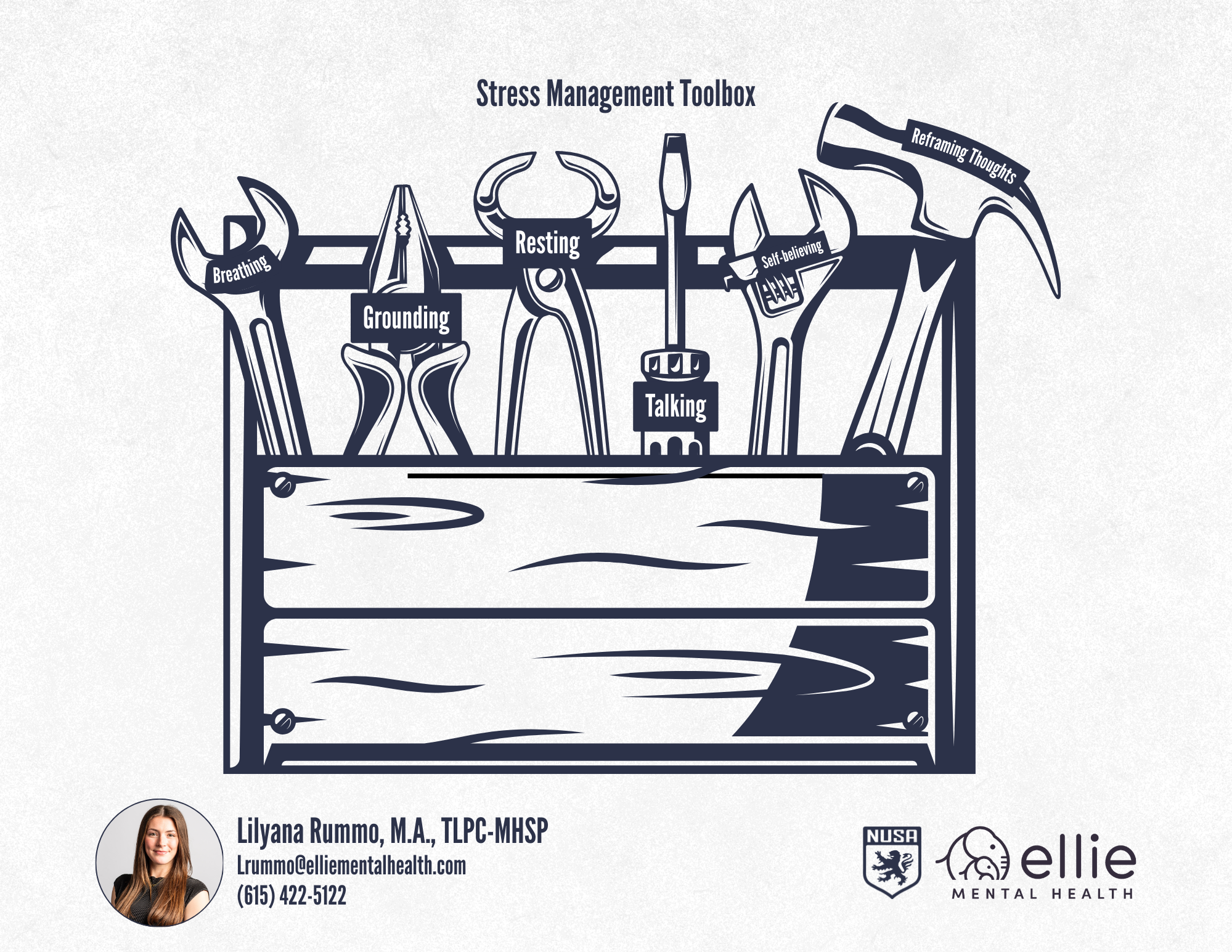
Stress management works best when players have lots of options. Think of it like a toolbox: Not every tool works for every situation. Sometimes you need breathing. Sometimes you need rest. Sometimes you need a conversation. Sometimes you need confidence. The more tools you have, the easier it becomes to handle whatever shows up.
Stress is part of life. The goal isn’t to avoid it, it’s to use it to motivate, strengthen, and grow.
Growing Through Stress at NUSA
At Nashville United Soccer Academy, we believe mental health is part of development. When players learn how to manage stress, they:
-
Play freely
-
Think clearly
-
Recover faster
-
Enjoy the game more
-
Grow as people, not just athletes
Soccer will always challenge you. But with the right tools, support, and mindset, those challenges become opportunities, on and off the field. Because strong players aren’t just trained physically, they’re supported mentally!
Developed in partnership with Lilyana Rommo of Ellie Mental Health.