
Social Media & Media Health for NUSA Athletes
In today’s world, young athletes spend a large part of their lives online. Social media, messaging, video, and digital content shape how players see themselves, interact with teammates, and handle pressure. When used intentionally, media can educate and inspire. When unmanaged, it can affect sleep, confidence, motivation, focus, and overall mental health.
At Nashville United Soccer Academy, we believe strong players start with strong habits. Healthy media use supports emotional balance, resilience, communication, and enjoyment of the game. This resource gives families a simple, practical framework to guide players toward positive, healthy relationships with technology, without removing independence or trust.
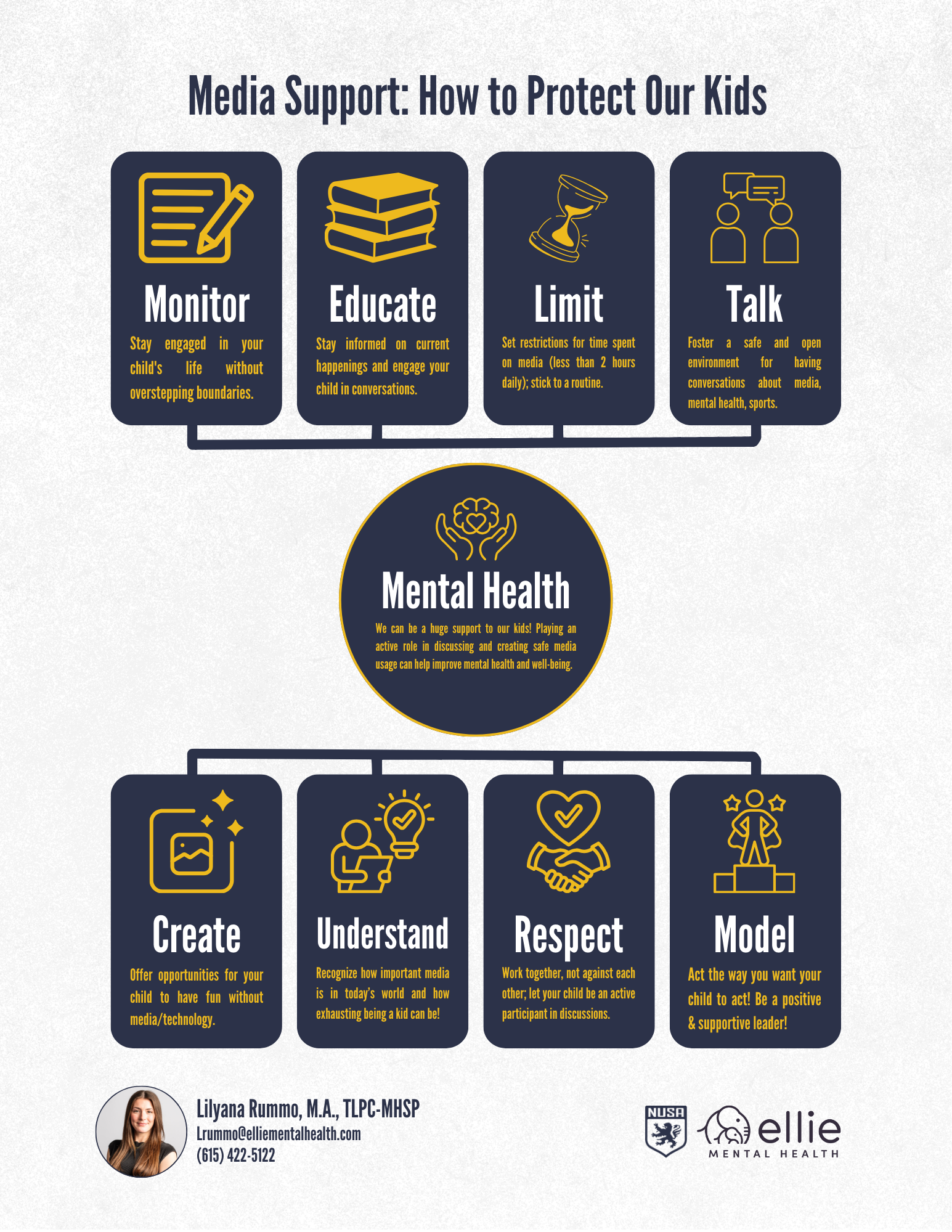
Introducing the Media Health Framework for Families, developed in partnership with Lilyana Rommo of Ellie Mental Health.
Monitor
Stay engaged in your child’s digital life without overstepping boundaries. Know what platforms they use, what content they consume, and how online interactions affect their mood and behavior. Monitoring isn’t about control, it’s about awareness and safety so you can support your player when challenges arise.
Educate
Stay informed on current media trends and talk with your child about what they see and experience online. Use media moments to teach values like respect, perspective, and responsibility. When players understand how social media influences mindset, comparison, and confidence, they’re better equipped to make healthy choices.
Limit
Set healthy boundaries for screen time and routines. A healthy amount is less than two hours of recreational screen use per day and consistent breaks from technology, especially before bed and around training. Limiting media helps protect sleep, focus, recovery, and motivation, all key parts of athletic development.
Talk
Create a safe, open environment for conversations about media, mental health, school, and sport. Encourage your child to share what they see, feel, and experience online without fear of punishment. Honest dialogue builds trust and helps players process pressure, mistakes, and emotions in healthy ways.
Create
Offer opportunities for your child to have fun and connect without screens. Free play, family time, hobbies, and outdoor activity help players recharge mentally and emotionally. Balance builds creativity, joy, and presence, qualities that translate directly to performance on the field.
Understand
Recognize how important media is in today’s world and how demanding life can feel for young athletes. School, soccer, social circles, and online expectations can be exhausting. Understanding your child’s perspective helps reduce conflict and strengthens your ability to support their mental well-being.
Respect
Work together, not against each other. Include your child in conversations about media use and boundaries. When players feel heard and respected, they’re more likely to take ownership of their habits and make responsible decisions both online and in competition.
Model
Be the example you want your child to follow. Demonstrate healthy screen habits, positive communication, emotional control, and balance in your own behavior. Players learn as much from what they see as what they’re told, strong leadership at home supports strong mindset on the field.
Why It Matters
Media health is player health. Confidence, focus, sleep, relationships, and enjoyment of the game all connect to how athletes manage technology. By following this framework, families help create an environment where players feel supported, resilient, and empowered, not only as soccer players, but as people.
At NUSA, development is more than a game, it’s about building champions of character on and off the pitch.