
Growing With Purpose: Goal Setting & Self-Evaluation in Soccer
Growth in soccer doesn’t happen by accident. It happens when players are intentional about what they’re working toward and honest about where they are right now. Two powerful tools that support long-term development are goal setting and self-evaluation. When used correctly, they help players build confidence, stay motivated, and enjoy the process of improving, not just the results.
At Nashville United Soccer Academy, development always comes before outcomes. Let’s look at how setting goals and evaluating ourselves can support that journey.
Why Goal Setting Matters
Research consistently shows that athletes who set goals improve their performance more than those who do not. But goals do more than improve results, they shape mindset and behavior.
Some of the benefits of goal setting include:
-
Increased self-confidence
-
Increased self-efficacy (belief in your ability)
-
Reduced anxiety
-
Increased effort
-
Better concentration
-
Higher satisfaction and enjoyment
Goals give players something to work toward. They create positive stress, the kind that motivates, challenges, and pushes us to grow rather than feel stuck.
Without goals, improvement becomes random. With goals, improvement becomes intentional.
How to Create Effective Goals
Not all goals are created equal. For goals to actually help players improve, they should be challenging, realistic, and clear.
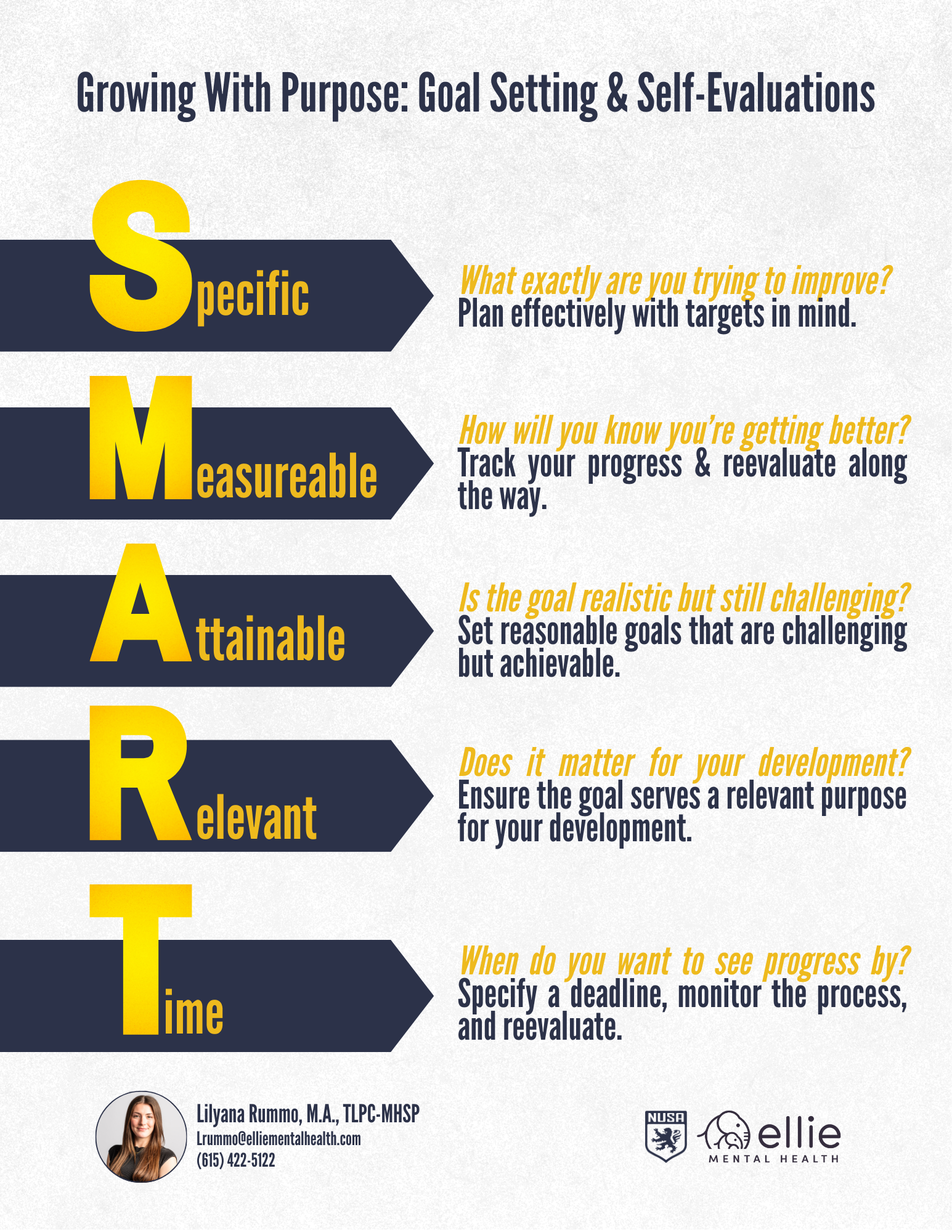
A great framework is the SMART method:
-
S – Specific: What exactly are you trying to improve?
-
M – Measurable: How will you know you’re getting better?
-
A – Attainable: Is the goal realistic but still challenging?
-
R – Relevant: Does it matter for your development and your team?
-
T – Time-Bound: When do you want to see progress by?
Instead of saying, “I want to be better,” a SMART goal sounds like, “I want to improve my first touch so I can keep possession better in games over the next six weeks.”
Other important parts of goal setting:
-
Write your goals down.
-
Create short-term and long-term goals.
-
Build an action plan with steps to reach them.
-
Set goals for both practices and games.
-
Re-evaluate your goals regularly.
Goals should evolve as players evolve.
Parents and coaches can help by checking in on both individual and team goals, asking questions, and offering feedback. Growth is not a solo process, it’s supported by communication and accountability.
Understanding Self-Evaluation
Player evaluations and self-reflections can sometimes feel uncomfortable. They can create anxiety and bring out emotions like worry, pride, disappointment, excitement, or frustration.
That’s normal, and healthy.
Those emotions mean players care about their soccer and about themselves.
When doing a self-evaluation, honesty matters. Not to judge, but to understand.
The purpose is simple:
-
Celebrate strengths.
-
Identify areas to improve.
If we don’t know what needs improving, improvement can’t happen.
And remember: no one is perfect. Not in soccer. Not in school. Not in life.
Even the best players in the world (yes, including Messi) still set goals and look for ways to improve. Growth never stops.
Balancing Strengths and Improvements
A strong evaluation includes both sides:
-
What went well?
-
What can be better?
If players only focus on mistakes, confidence drops. If players only focus on strengths, potential is limited. Finding the balance is what leads to real development.
A great habit is after every practice or game to identify, one thing that improved, one thing to keep working on. Over time, these small reflections add up to big growth.
Focusing on strengths builds confidence and enjoyment. Focusing on improvement builds discipline and progress. You need both.
How Parents & Coaches Can Support the Process
Evaluations and goal setting work best when players feel supported, not judged.
Parents and coaches can help by:
-
Starting conversations after practices and games.
-
Asking reflective questions instead of only talking about results.
-
Reminding players that evaluations are tools, not labels.
-
Encouraging effort, learning, and consistency.
Simple questions like:
“What did you feel good about today?”
“What’s one thing you want to work on next?”
These moments reduce anxiety and help players see growth as part of the journey.
Growth Happens With Purpose
Goal setting and self-evaluation aren’t about being perfect, they’re about being intentional. When players set clear goals and reflect honestly, they:
-
Stay motivated
-
Build confidence
-
Learn faster
-
Enjoy the game more
-
Take ownership of their development
At NUSA, we believe soccer is more than a game. It’s about learning how to grow, respond, reflect, and improve, on and off the field. Growth starts with purpose. And purpose starts with a plan.
Taking Care of the Player Behind the Athlete
Soccer is not just physical, it’s emotional and mental too. How players think, feel, and talk to themselves matters just as much as how they train. Goal setting and self-evaluation are powerful, but they should always support a player’s well-being, not harm it.
Goals are meant to motivate, not overwhelm.
Evaluations are meant to guide, not define.
It’s normal for athletes to feel pressure, frustration, nerves, fear of failure, or self-doubt at different points in the season. In fact, those feelings often show up when players care deeply about their growth. What matters most is how we respond to those feelings. Healthy mental habits in soccer include:
-
Giving yourself permission to make mistakes.
-
Understanding that progress is rarely linear.
-
Separating effort and identity from results.
-
Talking openly about challenges instead of hiding them.
-
Asking for help when something feels heavy.
When players struggle mentally, it doesn’t mean they are weak, it means they are human.
That’s why communication is so important at NUSA. Players are encouraged to talk with coaches, parents, and teammates when soccer feels stressful, confusing, or overwhelming. Growth happens best when athletes feel supported, safe, and understood.
Goal setting, self-evaluations, and feedback should always connect back to one question: “Is this helping the player become healthier, happier, and more confident?”
Because developing better soccer players starts with developing healthier people.
At Nashville United Soccer Academy, we believe mental health is part of performance, part of development, and part of life, on and off the field.
Developed in partnership with Lilyana Rommo of Ellie Mental Health.