
Competition & Mental Health: Turning Pressure Into Performance
Competition is one of the best parts of soccer… and one of the hardest.
Games, tryouts, training sessions, player evaluations, and even practices all bring emotion. Players might feel excitement, motivation, confidence, nerves, stress, worry, or pressure, sometimes all at once. Along with those emotions come physical changes in the body: faster breathing, increased heart rate, sweaty palms, tight muscles, and heightened focus. In soccer, we are always competing…with opponents, with teammates, and with ourselves.
At times, that can feel overwhelming. But the good news is this: the way we understand competition and anxiety can turn pressure into a powerful tool for growth.
What Happens to the Body in Competition
When competition approaches, the brain and body go into preparation mode.
You may notice:
-
Increased muscle tension
-
Elevated heart rate
-
Faster breathing
-
Sweating
-
Sharper awareness
This is not your body breaking down, it’s your body getting ready to perform. You can’t play soccer without breathing hard, raising your heart rate, and activating your muscles. These physical reactions prepare you to sprint, think faster, react quicker, and compete with intensity.
In other words, the feelings we often label as “nerves” are actually signs that your system is preparing to play.
Anxiety Isn’t the Enemy
Research shows that one of the most important parts of sports performance is how athletes think about the anxiety that competition brings.
There are two ways to view it:
- “This anxiety is hurting me.”
- “This anxiety is helping me.”
When players believe anxiety is harmful, performance often drops. Confidence shrinks, decisions slow down, and mistakes feel bigger. When players believe anxiety is helpful, performance improves. Focus sharpens, energy increases, and effort rises. Why? Because anxiety:
-
Prepares the body to compete
-
Signals that you care
-
Motivates action
-
Helps you lock in mentally
If we had zero stress about competition, we wouldn’t improve. We wouldn’t push ourselves. We wouldn’t grow. The goal isn’t to eliminate anxiety, it’s to use it.
Finding the Right Level of Pressure
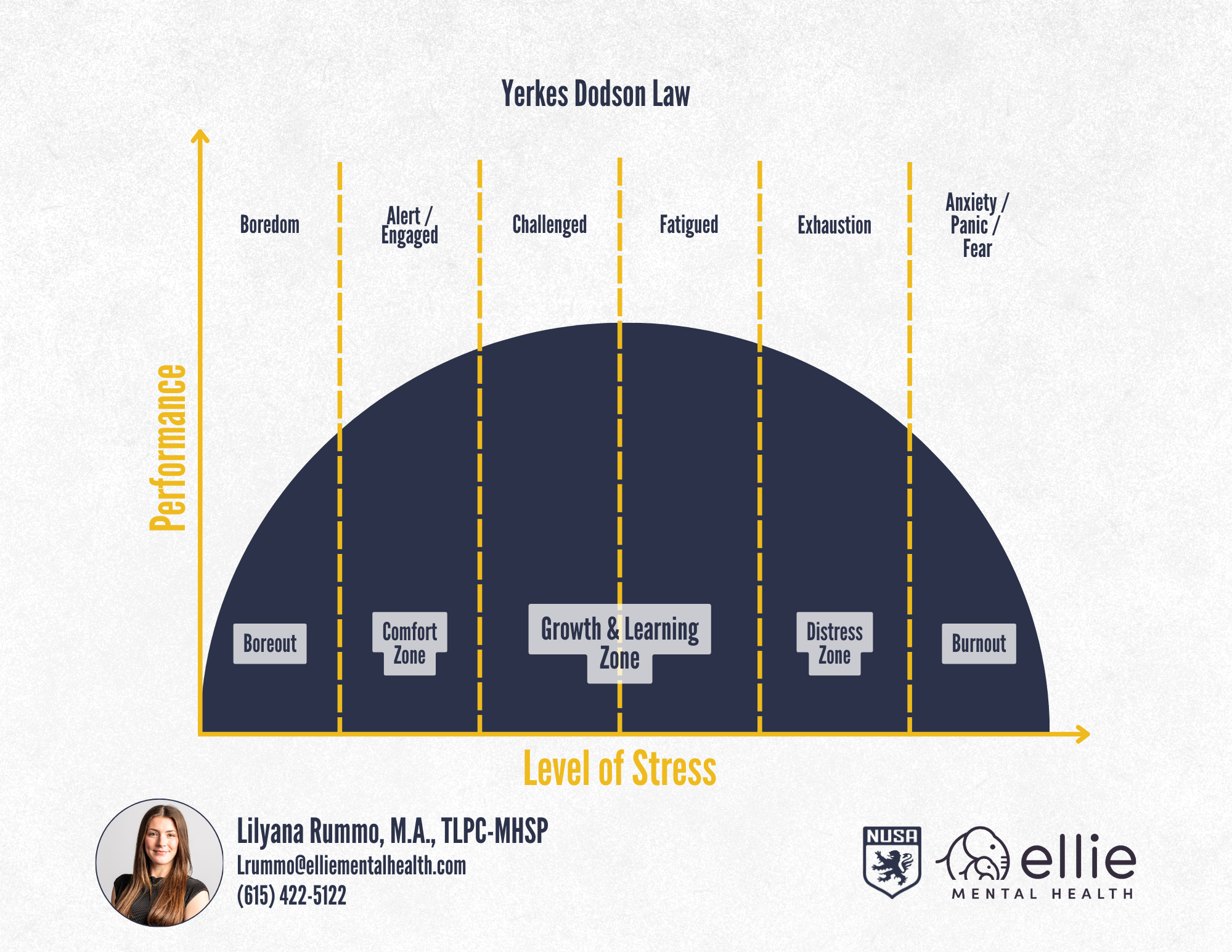
There is a balance when it comes to competition and mental health. Some stress is good. Too little stress leads to low effort. Too much stress can cause players to shut down. This idea is supported by the Yerkes-Dodson Law, which shows that athletes perform best with a moderate amount of stress and arousal, enough to stay focused and energized, but not so much that it becomes overwhelming. When players feel nervous about:
-
Player evaluations
-
Practices
-
Fitness sessions
-
Games
-
Tryouts
…it’s important to remember that those feelings can help fuel improvement as long as they stay in a healthy range. Learning to manage competition pressure is part of becoming a complete player.
Competing With Yourself First
Competition isn’t only about beating another team. It’s also about competing with your past self. That means asking:
-
Am I working harder than yesterday?
-
Am I learning from mistakes?
-
Am I staying brave on the ball?
-
Am I responding positively to challenges?
When players focus only on outcomes, goals, wins, minutes, anxiety grows fast. When players focus on effort, growth, and behavior, confidence grows instead.
At NUSA, competition is about development first. Winning matters, but how you compete matters more.
Mental Habits That Help in Competition
Healthy competition starts with healthy thinking. Some strong mental habits include:
-
Viewing nerves as energy, not fear.
-
Giving yourself permission to make mistakes.
-
Staying present instead of worrying about outcomes.
-
Focusing on what you can control: effort, attitude, and response.
-
Talking to coaches or parents when pressure feels heavy.
If competition ever starts to feel overwhelming, isolating, or discouraging, that’s a sign to speak up, not push it down. Mental health is part of performance, not separate from it.
Support From Coaches & Parents
Players don’t manage competition alone. Parents and coaches can help by:
-
Normalizing nerves before games.
-
Emphasizing effort over results.
-
Encouraging reflection instead of criticism.
-
Reminding players that pressure means opportunity.
-
Creating environments where players feel safe to talk.
Sometimes the best thing a player can hear is: “It’s okay to feel nervous. It means you care.”
Competing the Healthy Way
Competition will always bring pressure, and that’s okay. Pressure creates opportunity. Stress creates growth. Challenge creates development. The key is learning how to interpret what your mind and body are telling you.
At Nashville United Soccer Academy, we believe competition should build players up, not break them down. By understanding anxiety, embracing pressure, and staying connected to mental health, our athletes can compete with confidence, courage, and purpose on and off the field. Because the strongest competitors are not just physically prepared, they’re mentally supported.
Developed in partnership with Lilyana Rommo of Ellie Mental Health.
Gould, D. & Rolo, C. (2004). Competition in sport. Encyclopedia of Applied Psychology, 1, 441 – 447