

Preparing for the 2026-27 Seasonal-Year Transition
NASHVILLE, TN (February 3, 2026) – Nashville United Soccer Academy (NUSA) would like to share an important update regarding youth soccer age group formation beginning with the 2026-27 competitive season.
US Youth Soccer, US Club Soccer, and the American Youth Soccer Organization (AYSO) have collectively announced a nationwide change to how youth soccer age groups are formed. Following extensive review and discussion at the national level, the governing bodies have approved a transition designed to better align players with their school-grade peers.
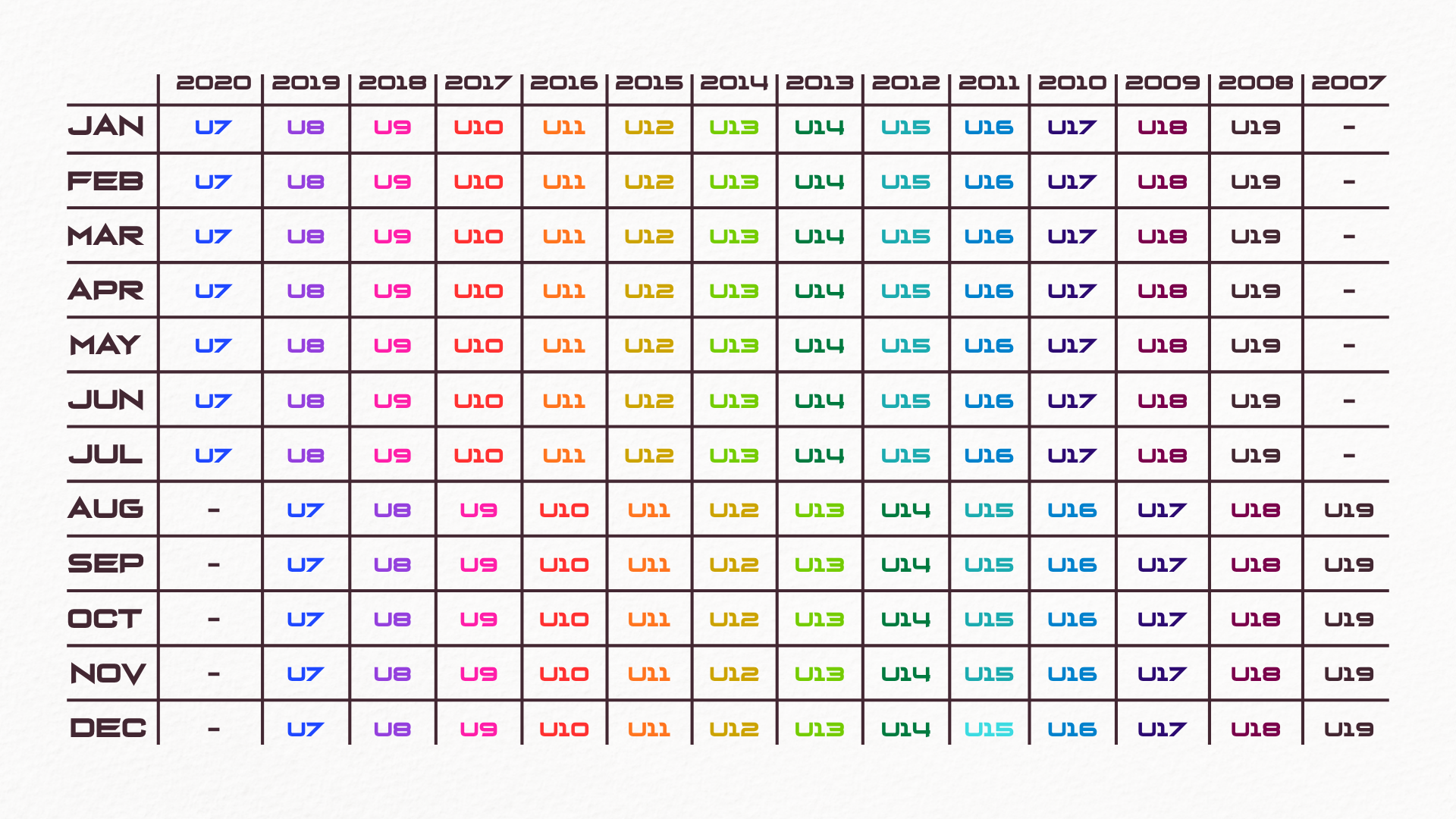
Beginning in the 2026-27 season, youth soccer will move away from the current calendar-year model (January 1 – December 31) and return to a seasonal-year model (August 1 – July 31) for age group placement.
This change impacts the majority of youth soccer players across the United States and represents a significant structural shift aimed at improving developmental alignment, social cohesion, and long-term player experience.
Programs Affected
The new seasonal-year model will apply to all teams competing in:
-
NUSA Lower Academy & Satellites
-
Tennessee State League (TSL)
-
Southeastern Clubs Champions League (SCCL)
-
Girls Academy (GA)
The following program will not be affected:
-
NUSA MLS NEXT, which will continue to follow the calendar-year model for roster formation in accordance with league standards.
What This Means for Players
With the nationwide age group formation change, some players will shift into a different age group for the 2026-27 season compared to their current placement. As a result, certain teams may experience changes to roster composition year over year.
At NUSA, we anticipate that most players will move into the age group that corresponds with their birthdate under the new seasonal-year model. However, our commitment remains the same: every player is evaluated individually.
NUSA’s coaching staff and directors will make placement decisions based on what we believe provides the best developmental environment for each player. In select cases, a player may be allowed to “play up” if it clearly supports their long-term growth, confidence, and pathway.
Please note:
Playing up will be the exception, not the rule, and will be determined through player assessment by NUSA coaching staff and directors. Players and families will not be able to independently choose whether a player plays up within the club.
A Reminder of NUSA’s Core Values
NUSA is the only club in Middle Tennessee that intentionally limits the size of our Lower Academies, Satellites, and team numbers per age group. This structure ensures that every NUSA player receives high-quality coaching, consistent training environments, and a unified player experience across the organization.
We prioritize long-term development over uncontrolled expansion.
Additionally, NUSA places strong emphasis on retaining returning players during tryouts, often leaving fewer roster spots available for outside players. This reflects our commitment to rewarding family trust and loyalty by continuing to invest in each player’s growth over time.
These principles reinforce NUSA’s core mission: delivering quality, consistency, and a player-first environment that values sustained commitment, character development, and individual progress both on and off the field.
How NUSA Is Preparing
NUSA leadership and coaching staff are already actively planning for a smooth and thoughtful transition into the new seasonal-year structure. Our staff is reviewing current rosters and birthdates to project how this shift will affect teams at each level of the club.
We understand that changes of this scale naturally raise questions and concerns. NUSA is committed to clear, transparent communication throughout the process and will continue providing updates as additional information becomes available.
Our focus remains unchanged: to support every player with the best possible environment for development, growth, and enjoyment of the game. See below for questions & a graphic depicting these changes.
Can my player play up an age group?
In some cases, yes, but playing up will be the exception, not the rule at NUSA.
Player placement decisions are made by NUSA coaching staff and directors based on what provides the best developmental environment for each individual. Factors such as technical ability, physical readiness, confidence, learning style, and long-term growth pathway are all considered.
Families and players cannot independently choose to play up an age group. Any decision to place a player above their designated age group will come through staff evaluation and alignment with NUSA’s development philosophy.
Can my child play in a younger age group?
No.
Players can not compete in younger age groups. The age group formation model is designed to ensure fair competition, appropriate challenge, and consistent developmental standards across the club.
Players will be placed in their assigned age group based on the seasonal-year model and NUSA’s evaluation process.
Why the change?
The change is being implemented nationwide by US Youth Soccer, US Club Soccer, and AYSO to better align youth soccer players with their school-grade peers.
By returning to a seasonal-year model (August 1 – July 31), players are grouped more closely with classmates, friends, and teammates they interact with daily. This helps improve social connection, team cohesion, and long-term player experience, while also simplifying pathways across leagues, schools, and development programs.
Ultimately, the goal is to create a more consistent and player-centered structure across youth soccer in the United States.
When does the change take place?
The age group formation change will begin with the 2026-27 competitive season.
All affected NUSA programs will use the seasonal-year model for roster formation starting with 2026-27 tryouts and team placements. Until then, current teams will continue operating under the existing calendar-year structure.
NUSA will provide continued guidance, timelines, and updates as we move closer to implementation to ensure families are well informed and prepared.
Will my child stay with their current teammates?
In many cases, players will remain with familiar teammates, but this cannot be guaranteed. Because the seasonal-year model reorganizes age groups across the entire country, some teams will naturally shift as players move into their newly assigned age classifications. While NUSA values continuity and relationships, roster construction will ultimately be guided by what creates the healthiest competitive and developmental environment for each age group.
Our staff works intentionally to balance team chemistry, player history, and long-term development when forming rosters.
Will this affect my child’s position or role on the team?
Possibly, but not negatively by default.
Player roles and positions evolve as part of long-term development. With new teammates and competitive environments, players may be asked to explore different responsibilities that help broaden their understanding of the game.
NUSA coaches focus on developing complete players rather than locking athletes into one role too early. Any positional adjustments are made with the player’s growth, confidence, and learning in mind.
Will competition levels change for my child?
In some cases, yes, and often in a positive way.
With players grouped more closely by school year, competition becomes more developmentally appropriate. Some players may face new challenges, while others may gain confidence in environments better aligned with their stage of growth.
NUSA’s goal is always to place players where they are challenged, supported, and able to continue improving at a healthy pace.
What if my child feels uncomfortable with the change?
Open communication is encouraged. Transitions can feel challenging at first, and NUSA understands that every player adjusts differently. Players and families are encouraged to communicate with their coach if concerns arise so they can be addressed early and constructively.
Our goal is to ensure every player feels supported, motivated, and excited to continue their development within the NUSA environment.